
Building on this ground
The soil here moves, and it takes slabs with it
Grayson County sits on Blackland Prairie clay. It swells when it rains and shrinks hard when it does not, and that seasonal movement is the single biggest reason foundations fail in North Texas. If you are building here, this is the part of the budget that is not worth trimming.
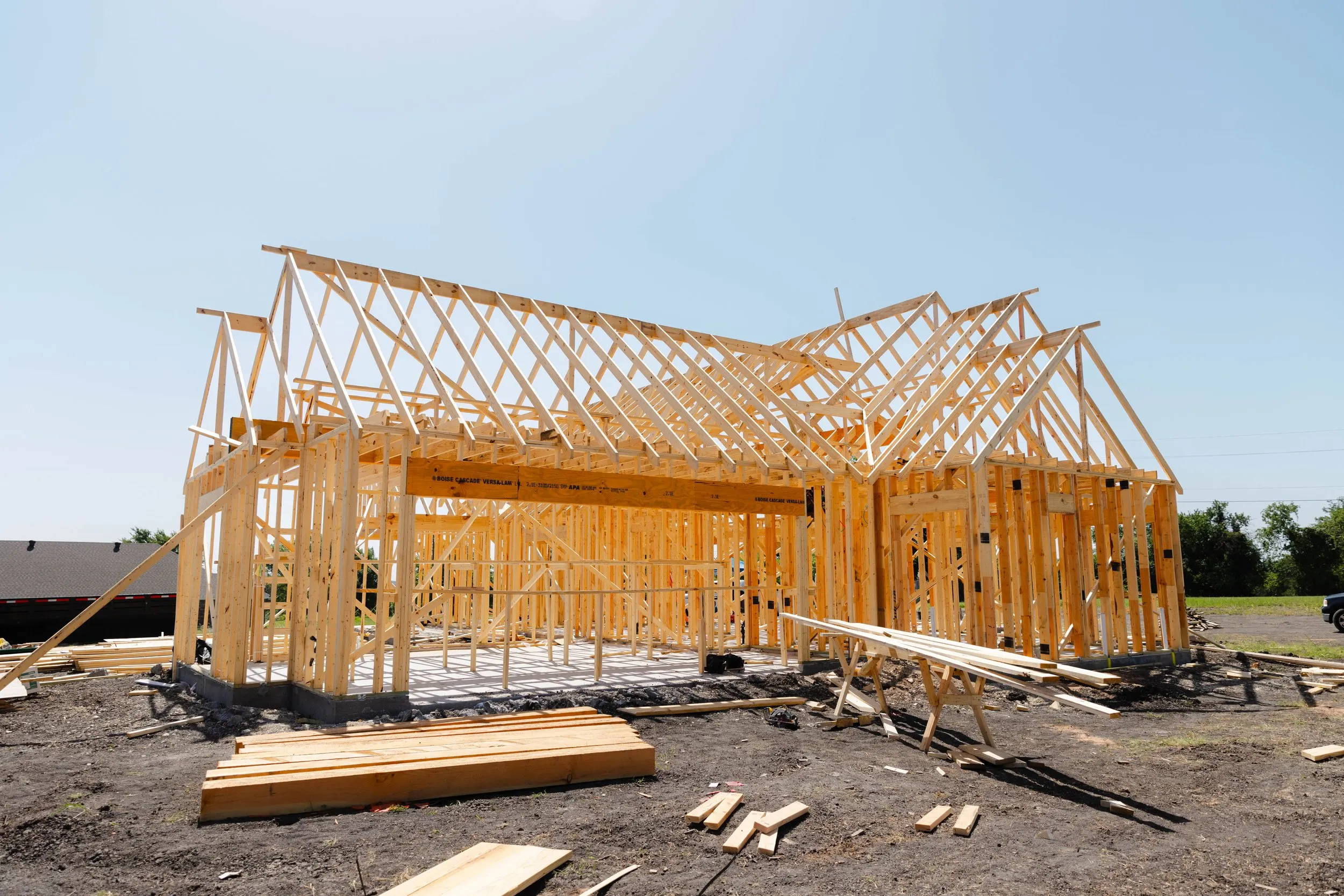
What the soil is doing
A plasticity index of 40 to 60, in plain terms.
Plasticity index measures how much a soil changes volume as its moisture changes. Sand sits near zero and barely moves. Blackland clay runs in the 40 to 60 range, which puts it among the more active soils anybody builds on in this country.
In a wet spring that clay takes on water and swells upward. In an August drought it gives the water back and shrinks away. The movement is rarely even across a lot, so one corner of a house can lift while another settles.
A slab is stiff and the ground under it is not. Move the support unevenly for long enough and something has to give, which shows up as cracked brick, doors that stop closing, and separation where walls meet ceilings.
None of this makes the ground unbuildable. It has been built on for a very long time. It just means the foundation gets designed for the soil rather than pulled off a shelf.
The soil report comes before the foundation design, and the foundation design comes before the price. Any other order means somebody is guessing.
What gets built instead
Two approaches, and the report picks one.
Post-tension slab
Steel tendons run through the slab in a grid and get tightened after the concrete cures. The result behaves as a single stiff plate, so when the ground moves under one part of it the whole slab carries the load rather than cracking at the weak point.
Drilled piers
Shafts are drilled through the active zone down to material that does not move with the weather, and the structure bears on those. It costs more and it is the right answer on some lots, particularly where the active zone runs deep or the site has real slope.
Which one your house gets is an engineering decision, not a sales decision.
Common questions
What people ask about foundations here.
- Do I really need a geotechnical report?
- On Blackland Prairie clay, yes. It tells the engineer how deep the active zone runs and how much the soil moves, and the foundation design comes out of those numbers. Building without one means somebody is guessing at the most expensive thing to fix later.
- Post-tension slab or drilled piers?
- Both are used around here and the soil report decides which suits your lot. A post-tension slab is cast with steel tendons that get tightened after the pour so the slab acts as one stiff piece. Piers carry the house down to more stable material. Neither is a luxury upgrade on this ground.
- Is a conventional slab ever right in Grayson County?
- Rarely, and a bid built around one is worth questioning. It is one of the clearest signals that a builder either has not worked on this soil or is trimming the number to win the job.
- What can I do to protect the foundation once I live there?
- Keep moisture even. Gutters that discharge well away from the slab, positive fall on the grade, and no large thirsty trees planted close to the house. Long dry spells followed by heavy rain are what does the damage.
- Are foundation cracks always a problem?
- No. Hairline shrinkage cracks in concrete are normal and appear in almost every slab. Cracks that widen, run diagonally through brick, or come with doors that stop latching are a different conversation.
Also worth reading
- Buying land in Grayson CountyWhat to check before you sign, including the soil.
- Comparing two builder bidsThe foundation line is where quotes diverge most.
- Aerobic septic systemsThe same clay decides your septic system too.