
The process
What happens between the first call and the keys
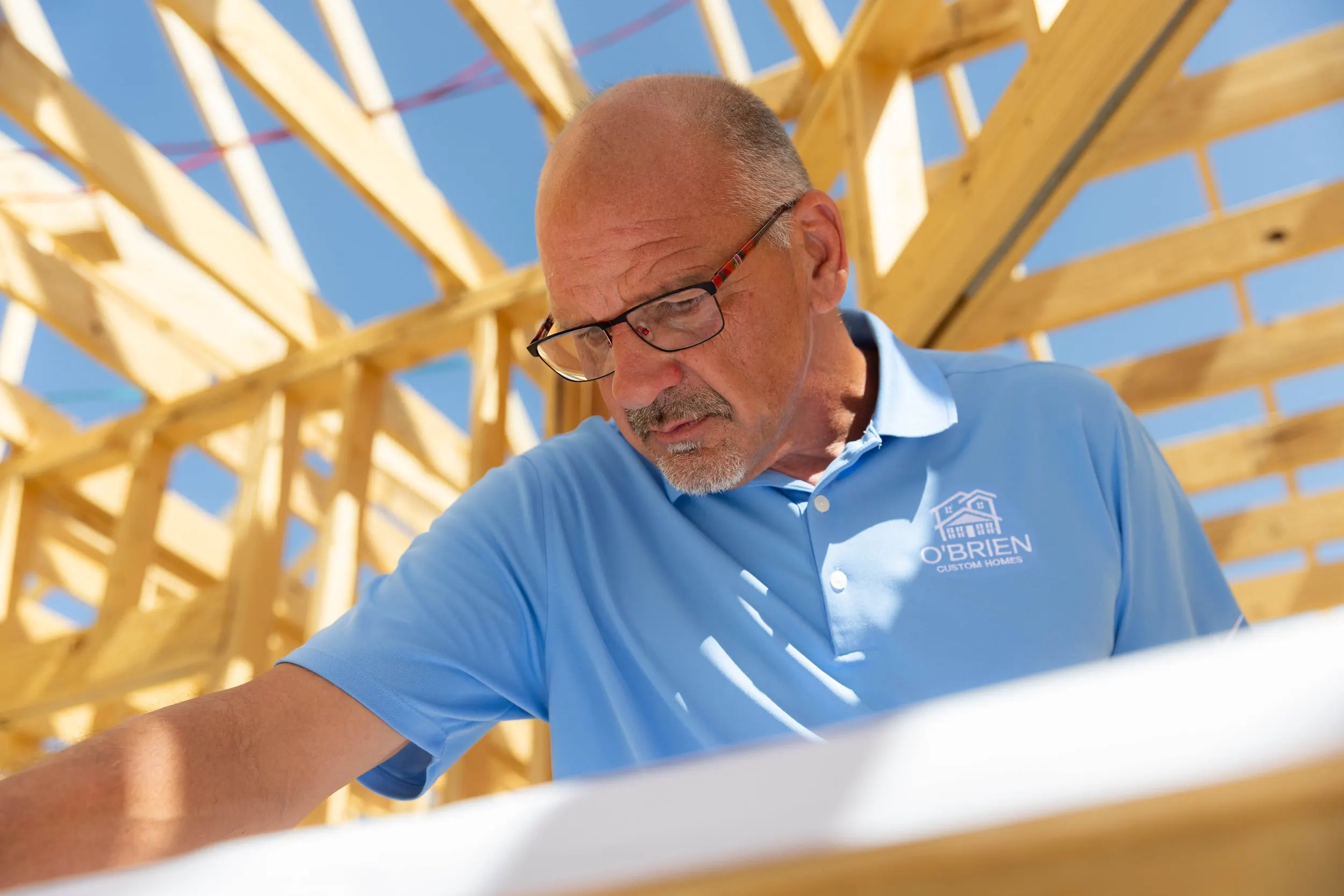
Most builder websites describe this in five friendly words and a stock photo. Here is the actual sequence, including the parts that are slow, the parts that look alarming from the outside, and the one thing that does not change at any point. Randy is the person you deal with the whole way through.
Eight steps
Start to finish, in the order it actually happens.
- One
You call, and Randy answers
There is no receptionist and no sales team. He will ask what you want to build, where, and roughly what you have to spend. If what you want does not match what you have, he will tell you on that first call rather than three months into a set of drawings.
- Two
He walks the land before anything is priced
Slope, access, where the nearest power pole is, how water leaves the site, and where the house actually wants to sit. Out here the lot decides more than the plan does, and no honest number exists until somebody has stood on it. The visit is free whether you own the lot or are still deciding whether to buy it.
- Three
Plans, from wherever you have them
Some people arrive with a full architectural set. Some bring a plan they found and want changed. Some start with a rough sketch and a list of what the last house got wrong. Randy builds from all three.
- Four
Specs get written down, then priced
The specification comes first and the number comes second, because a price attached to a vague scope is not a price. Where something genuinely cannot be pinned down yet it goes in as an allowance, and he will tell you which line items those are instead of burying them.
- Five
Permits, and which government you are dealing with
Inside the city limits you are on that city. Outside them you are on Grayson County. Different processes, different timelines, and which side of the line your lot falls on changes your schedule before a shovel moves.
- Six
Dirt work and an engineered foundation
A geotechnical report drives the foundation design, and on this clay that is not a formality. Site prep, drainage and the slab are the part of the build you will never see again once it is done, which is exactly why it is the part worth getting right.
- Seven
Framing, dry-in, mechanicals
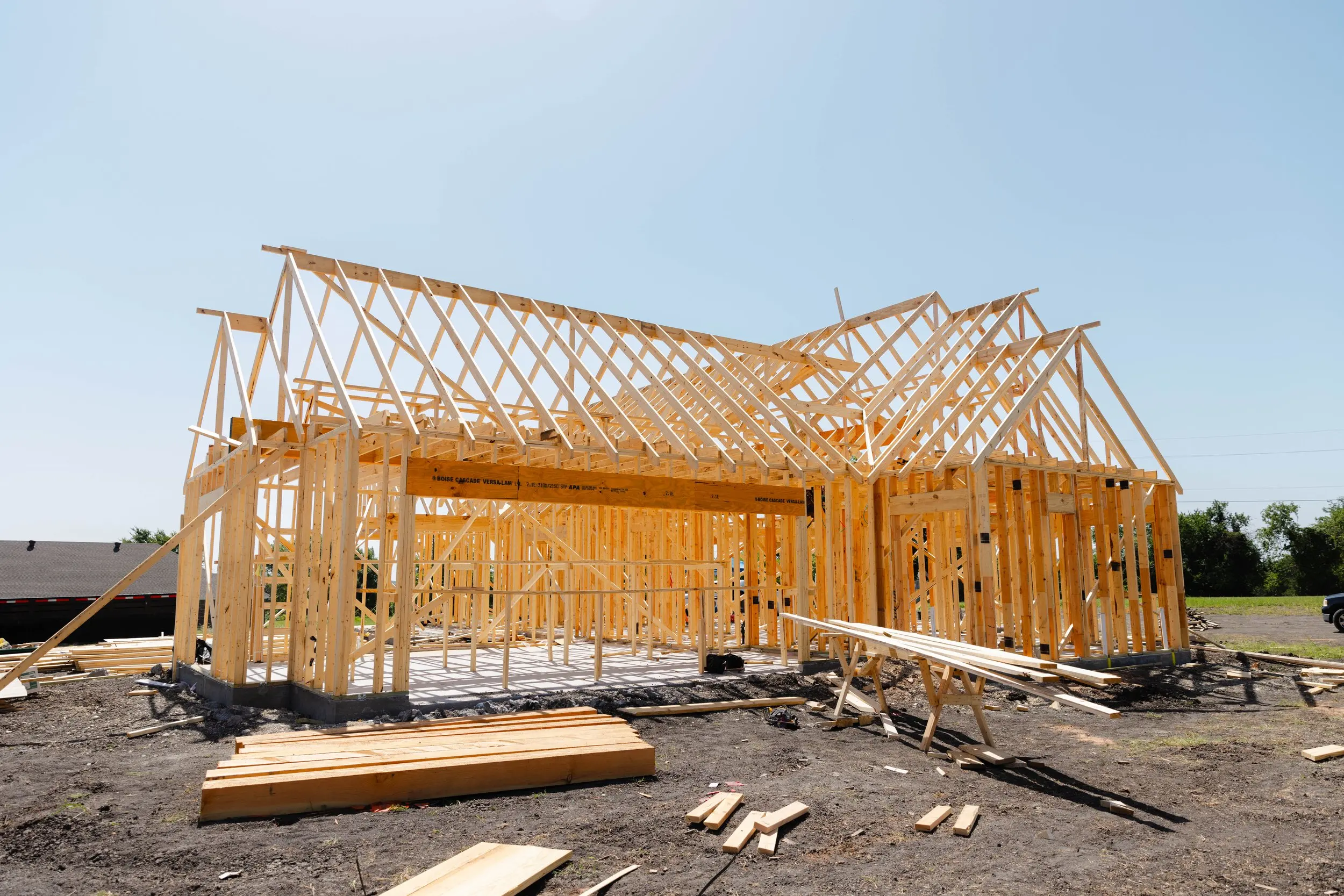
Frame, roof, windows and doors, then the house gets closed up. Plumbing, electrical and HVAC go in behind the walls, each with its own inspection. This is the stretch where the house stops looking like progress and starts looking like a mess. It is normal.
- Eight
Selections, finishes, walkthrough, keys
Cabinets, counters, floors, fixtures and paint. Then a walkthrough where you write down everything that is not right, and it gets fixed before you move in rather than after.
The part that does not change
One person is accountable for all eight steps.
At a larger builder each of these stages belongs to somebody different. A sales agent sells it, a project manager schedules it, a superintendent runs it, and a warranty department hears about it afterward. Every handoff is a place where something gets dropped.
Randy builds about ten houses a year, which is the number one person can actually be on site for. That is the whole reason to hire him instead of somebody bigger, and it is also why he cannot take twenty jobs.
We never had to chase him. If we called, he answered — and if he said he’d be there Tuesday, he was there Tuesday.
Hamid & Lisa S.O’Brien homeowner
Worth reading before you call
- Questions to ask any builderIncluding the ones that make a bad fit obvious early.
- Building on land you already ownMost of what Randy does.
- Comparing two builder bidsFor when you are holding quotes that do not match.